Why the Non-Slip Bottom Struggles on Tile Floors
The Bedfolks Calming Donut Dog Bed includes a non-slip bottom with TPU (thermoplastic polyurethane) dots that are engineered to create friction and prevent sliding. However, tile flooring presents a unique problem: tile surfaces are inherently smooth and non-porous, which reduces the grip that TPU dots can achieve. The anti-slip mechanism works by creating micro-friction points between the bed's bottom and the floor surface. On carpet or textured rugs, these TPU dots sink slightly into the fibers and create substantial grip. On tile, the dots make contact with a completely smooth, hard surface, resulting in minimal friction and allowing the bed to shift when your dog jumps in, moves around, or gets up.
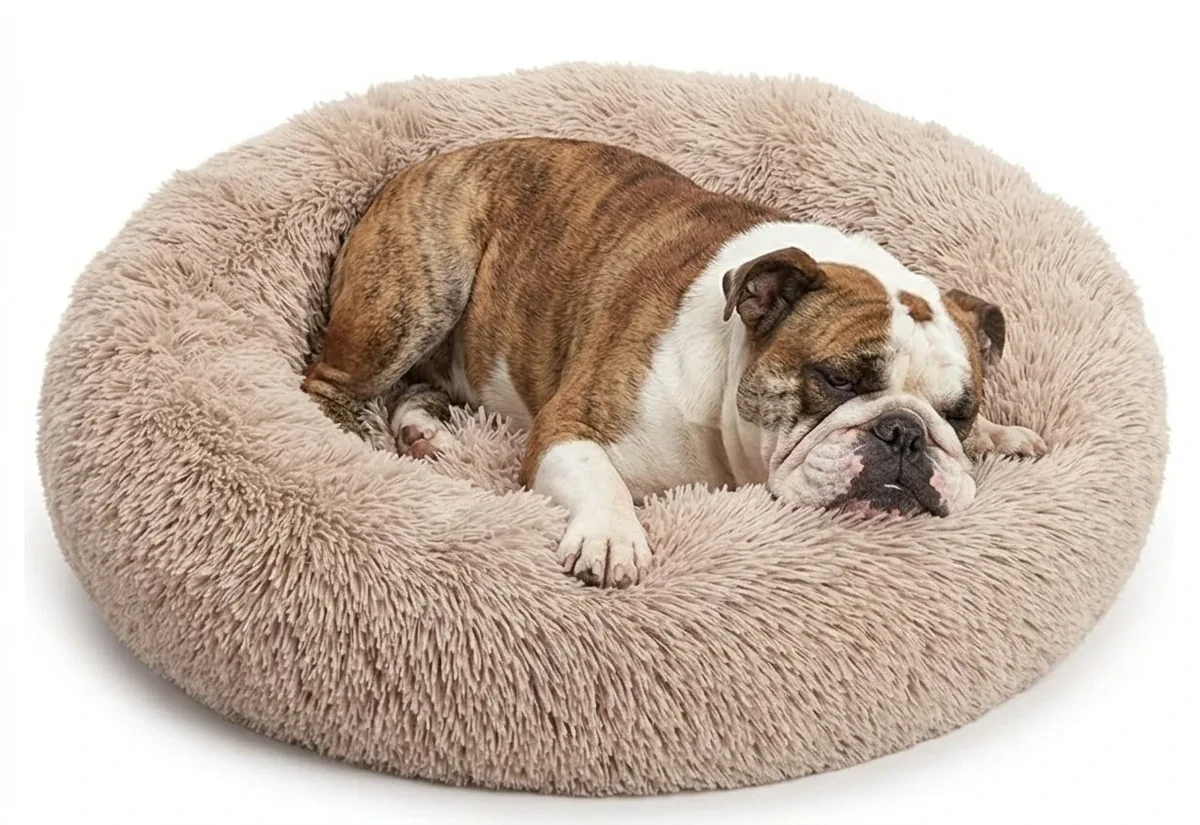
This isn't a manufacturing defect—it's a fundamental physics problem. Most pet beds with non-slip bottoms use similar TPU dot technology, which performs adequately on most household flooring but struggles specifically on tile, polished concrete, and other hard, smooth surfaces. The bed's construction is durable and the TPU dots maintain their integrity through washing, but their effectiveness is directly dependent on the floor texture they're placed against.
📖 Related: Best donut dog bed like Bedfolks for senior dogs with joi...
- The Bedfolks bed features TPU dot technology on its bottom for anti-slip performance
- TPU dots are most effective on textured surfaces like carpet and area rugs, with grip performance dropping significantly on smooth tile
- The bed's non-slip bottom maintains durability through machine washing without degradation
- Users with tile flooring report the bed shifts more easily than those with carpeted surfaces
- The 36-inch diameter model (designed for dogs up to 100 lbs) experiences more noticeable movement on tile than smaller sizes due to increased surface area and weight distribution
What Experienced Users Report About Tile Floor Performance
Pet owners who use the Bedfolks Calming Donut Dog Bed on tile flooring consistently report that while the bed itself is high-quality and comfortable, the non-slip bottom doesn't prevent sliding as effectively as advertised on hard surfaces. Users note that when their dogs jump into the bed or shift positions, the bed moves across the tile, which can be frustrating for maintaining placement and potentially unsafe if the bed slides into a wall or furniture. Some owners report that the bed performs adequately if their dog is relatively still, but becomes problematic with active or larger dogs that move frequently. The removable, machine-washable cover maintains its quality through regular cleaning, but the non-slip bottom's effectiveness doesn't improve or degrade with washing—it remains limited by the tile surface itself.
📖 Related: Is Bedfolks Calming Donut Dog Bed best for anxious dogs i...
How to Improve Grip on Tile: Practical Solutions
If you're experiencing slipping issues with your Bedfolks bed on tile floors, several proven solutions can significantly improve stability without damaging the bed or flooring. The most effective approach is to place the bed on an area rug or yoga mat, which creates a textured surface that the TPU dots can grip effectively. This solution is particularly popular because it also adds comfort and warmth for your dog while protecting the tile from potential scratching. Alternatively, you can use non-slip shelf liner, furniture pads, or anti-slip tape designed for hard floors underneath the bed—these products create friction between the bed's bottom and the tile while remaining removable and non-damaging. Some users apply removable adhesive-backed non-slip pads directly to the TPU dots, though this requires careful application to avoid reducing the bed's washability.
Should You Use a Rug or Furniture Pads with the Bedfolks Bed on Tile?
Using an area rug or furniture pads is the recommended approach for tile floor placement because it addresses the root cause—lack of surface friction—without compromising the bed's features. A rug or mat creates the textured surface that the TPU dots were designed to grip, dramatically improving stability and preventing the bed from shifting when your dog moves. This solution also provides additional benefits: it insulates the bed from cold tile, creates a defined space for your pet, and protects your flooring. If you choose this route, select a rug with a non-slip backing itself to prevent the rug from sliding on the tile. Furniture pads or non-slip liners work similarly and take up less visual space if you prefer a minimalist approach. The key is creating an intermediate textured layer between the bed's TPU bottom and the smooth tile surface.
Practical Recommendations
- Use an area rug or yoga mat: Place a textured rug underneath the Bedfolks bed to create friction for the TPU dots. This is the most effective solution and adds insulation and comfort for your dog on cold tile.
- Apply furniture pads or non-slip liners: Use removable non-slip products designed for hard floors under the bed's bottom. These are less visible than rugs and still provide significant grip improvement without permanent installation.
- Position the bed against a wall: If your tile room layout allows, place the bed against a wall or in a corner to naturally limit sliding in one or two directions, reducing the overall movement problem.
- Avoid adhesive solutions on the TPU dots: While tempting, applying adhesive-backed pads directly to the TPU dots can interfere with the cover's removability and washability, making cleaning more difficult.
The Bottom Line
The Bedfolks Calming Donut Dog Bed's non-slip bottom is not defective—it's simply not optimized for smooth tile flooring. The TPU dot technology works as designed on textured surfaces but loses effectiveness on hard, smooth floors due to lack of friction. If you're experiencing the bed slipping on tile, the solution is straightforward: add a textured layer like an area rug or non-slip furniture pads underneath. This simple fix transforms the bed's stability on tile while maintaining all of its comfort and washability features. The bed itself remains an excellent choice for tile floors once you address the surface friction issue with an intermediate layer.
